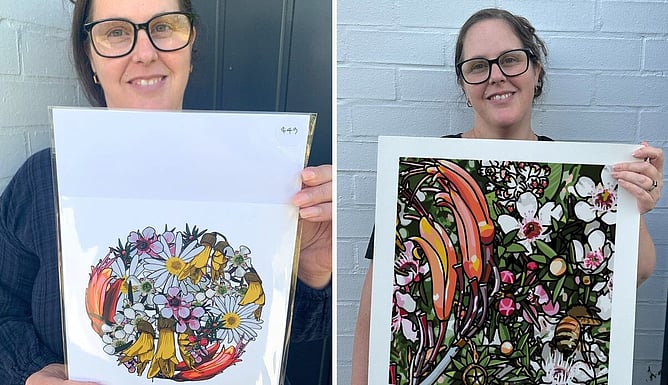
“What sizes do you do?” Here’s how to choose the right size art print for your wall.
I'm a bit fussy about this in my own home. Get the size right and a print owns the space. Get it wrong and it just looks a bit lost.
So here's everything I've learnt about choosing the right size art print, plus a size chart so you can see how each size compares.
What sizes do my art prints come in?
My art prints come in two shapes.
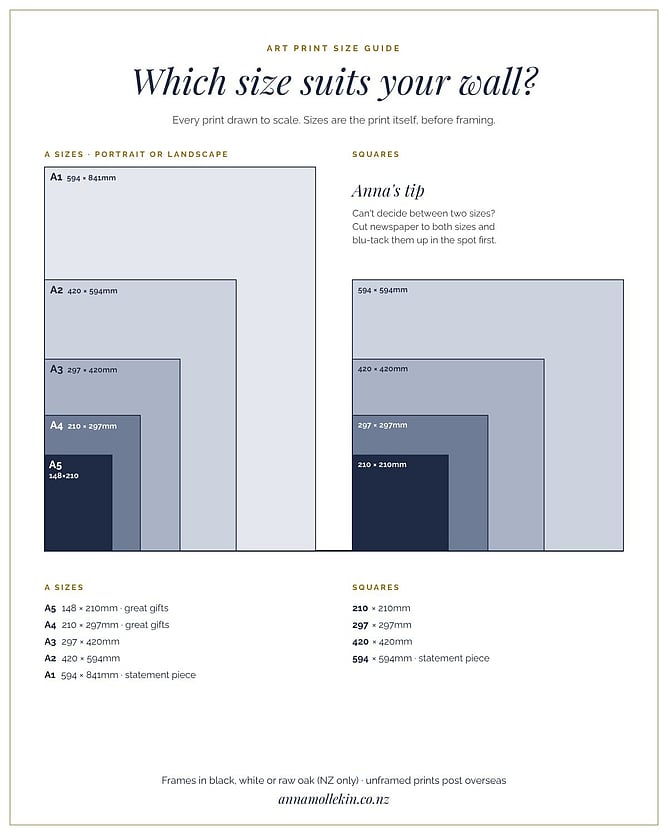
A sizes: my rectangular artworks come in A5, A4, A3, A2 and A1.
Squares: 210 × 210mm, 297 × 297mm, 420 × 420mm and 594 × 594mm.
You can buy any print unframed and frame it yourself, or pick a frame in black, white or raw oak so it arrives ready to hang. My frames have no mat, so the print sits straight against the glass. If you'd love a mat around yours, buy it unframed and take it to your local framer. Framed prints are NZ only. If you're sending one overseas, I post it unframed, because glass in a frame will more than likely break on the journey.
The sizes above are the print itself. A frame adds to that, so if you're measuring a wall, check the overall framed sizes in my framing guide.
How I choose sizes for my own walls
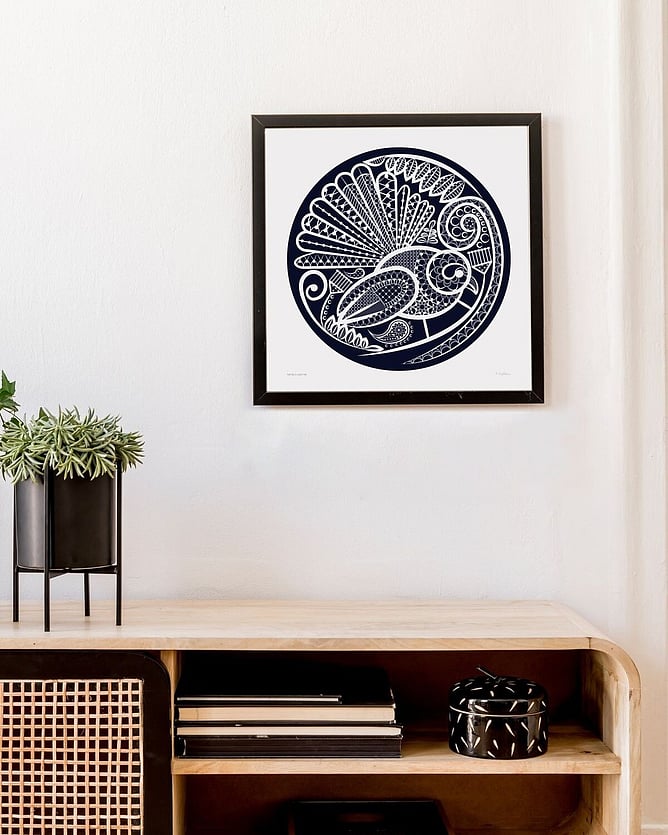
I'm really cautious about what goes where at home, because I know the wrong size can make a whole wall look funny.
A lot of my walls suit an A2 frame. So if I fall for an artwork in a smaller size, say A3, I put a mat around it and go up a frame size. That makes it big enough to own the wall.
I tend not to hang a small artwork on its own on a big wall. It can look a bit lost and out of place. A small piece on its own suits a small space, like a narrow bit of wall beside a door or above a bedside table. Otherwise I group smaller artworks together in a gallery wall, or pop them on a shelf or cabinet with other bits and pieces I love.
I always leave enough breathing room around each piece so the whole wall feels balanced. And I think about where I'll be standing when I look at it, and how high it sits above the furniture, so it lands around eye height.
Quick sizing rules that actually work
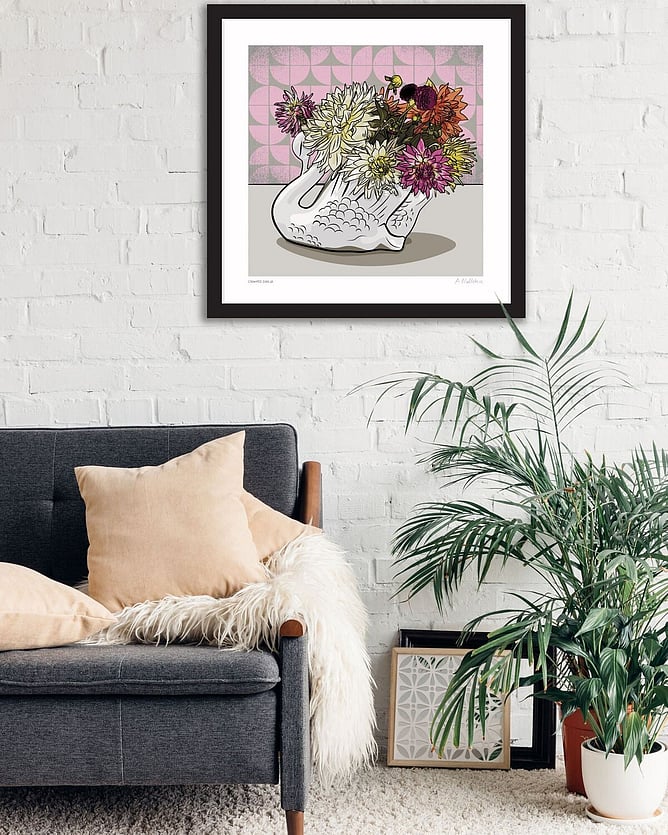
These are the general rules interior experts swear by. I use them as a starting point, then trust my eye.
On a bare wall, artwork should fill about 50 to 75% of the space.
Above furniture, aim for artwork about two-thirds the width of the sofa, bed or sideboard.
Leave around 150 to 300mm between the bottom of the frame and the top of the furniture.
Hang it so the centre of the artwork sits at eye level, around 1.5m from the floor.
In a group, keep 75 to 150mm between frames.
Can art be too big? Yes, it can. If you can't step back far enough to take the whole thing in, a huge piece will feel in your face. In a small room or a hallway, go down a size or split it into a pair.
Does the shape of your wall matter? It does. Landscape artwork suits long, wide walls. Portrait artwork suits narrow walls and leaves them room to breathe.
Going big? Make it a statement piece
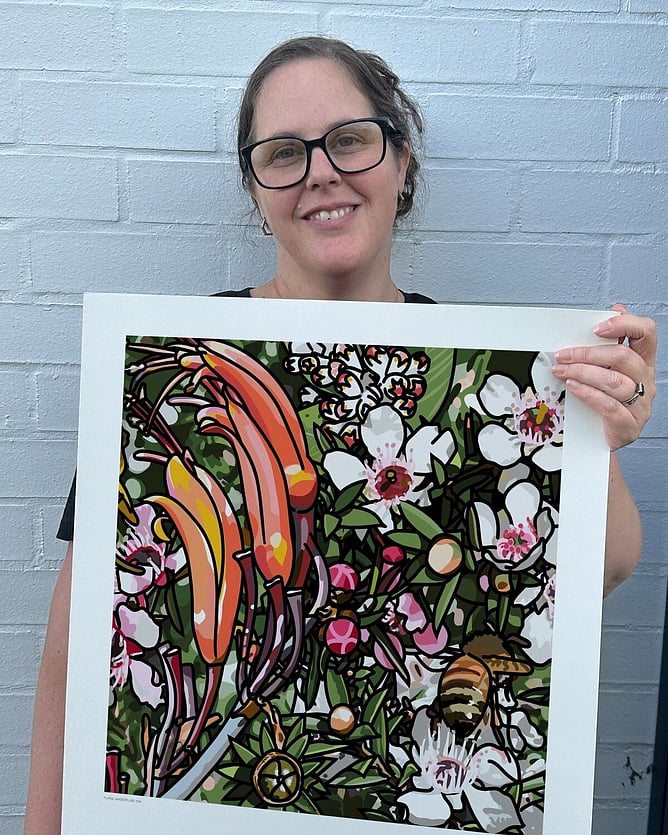
Most of my customers go big, and I love that. The larger sizes really show off all the little details in my line work. An A1 or a 594mm square becomes the first thing people notice when they walk into the room.
Got a really big wall to fill? That's exactly why I created my sets. My NZ Floral Wonderland diptych is two artworks made to hang side by side, and my Fantail, Huia and Kiwi Tapestry triptych is a set of three. Hung together, they cover far more wall than a single print, and they feel like one big statement piece.
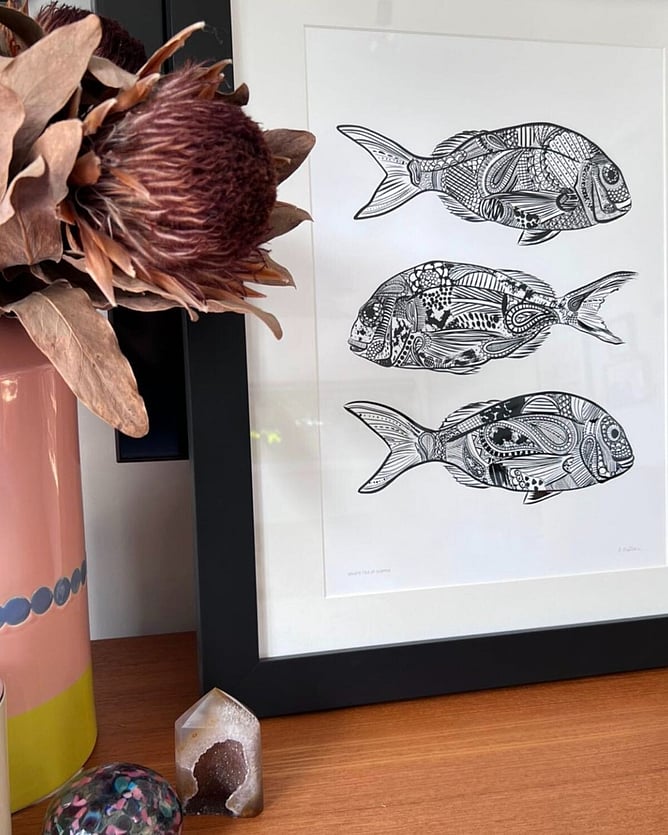
The mat trick works here too, with a custom frame from your framer. My friend Amy framed my Ornate Trio of Snapper with a wide white mat in a black frame, as a gift for a loved one. The frame looks generous and the artwork gets plenty of room to breathe.
Small sizes make the best gifts
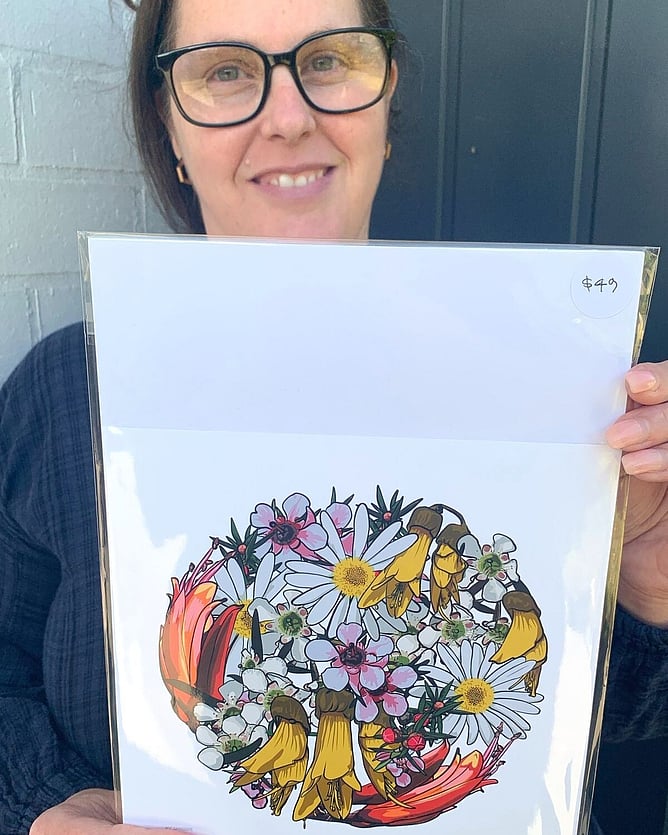
A5, A4 and the 210mm square are my favourite gift sizes. They're easy to wrap and easy to post. Small prints are perfect for shelves, too. People pop them on a dresser or a bookshelf around the house, grouped with their favourite treasures and special keepsakes.
Lots of people send them to loved ones overseas. A little taste of home from Aotearoa, sent unframed and flat in the post.
Planning a gallery wall
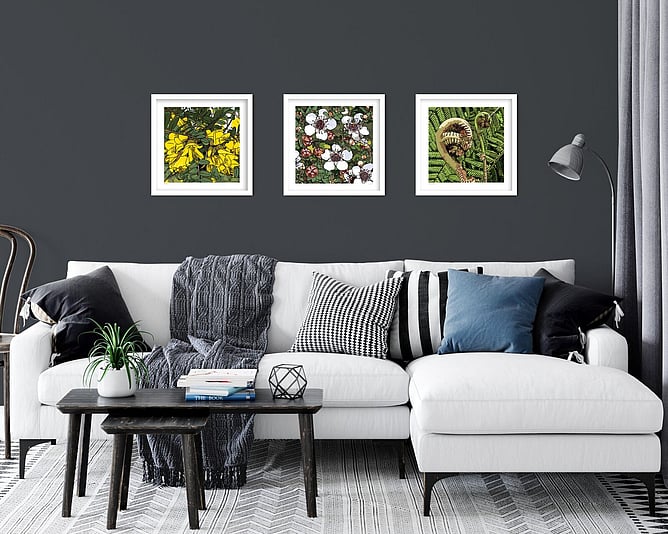
Treat a gallery wall like one big artwork. Pick a common thread, like colour, theme or frame colour, and have some fun with it.
Lay everything out on the floor first and shuffle it around until it feels right. Keep the gaps between frames even. A trio in the same size always looks balanced, and it leads your eye right across the wall.
Still torn between two sizes?
Here's my favourite trick. Grab some old paper. Newspaper, wrapping paper, anything lying around the house is fine. Cut it to the two sizes you're thinking about.
Stick them up in the spot you have in mind with blu-tack, or anything that won't mark the wall. Then stand back and have a look. You'll know pretty quickly which one fits.
It's so much easier to map it out first. You want to get the right piece.
What wall are you trying to fill?
Tell me in the comments below. Is it a big empty wall above the sofa, or a little nook that needs something special? I'd love to help you work out the right size.